Standing water in the bottom of a dishwasher is usually a blocked filter, a blocked air gap, a kinked drain hose or a dead drain pump. The first three are free and take about ten minutes between them. The pump runs $180 to $400.
What to check, in order
Free checks first. The cheap causes are also the common ones.
Clean the filter
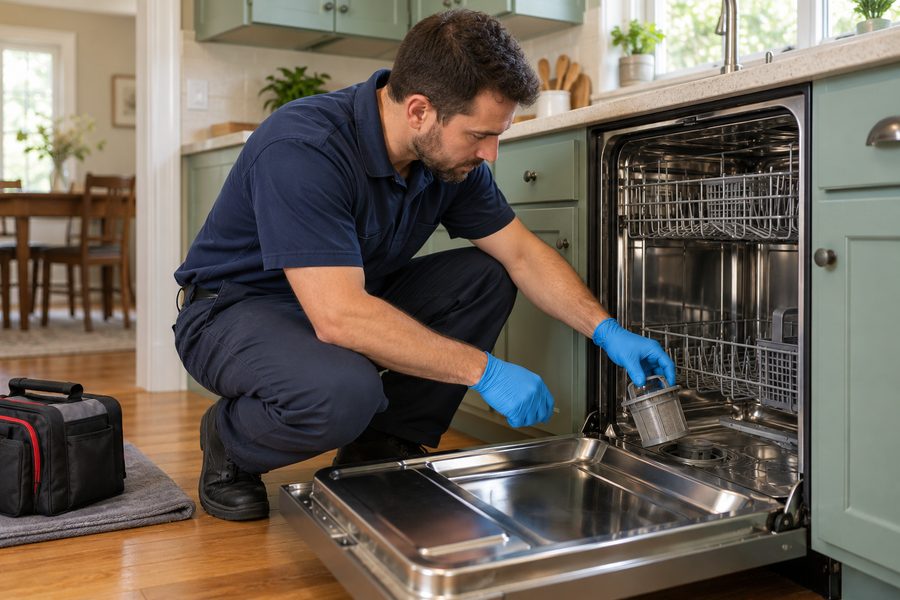
Pull the bottom rack out and twist the round filter in the floor of the tub. Lift it out and rinse the grease and food off it in the sink. A blocked filter is the most common cause and the one nobody expects, because plenty of older machines never had a filter you were meant to clean.
Check the air gap
If there is a small chrome cap on the counter next to the faucet, pull the cover off and clear what is inside it. A blocked air gap stops the water leaving even when the dishwasher itself is perfectly fine.
Check the hose under the sink
Look for a kink where the hose loops up behind the cabinet. Then look at the garbage disposal inlet. If a disposal went in recently, the knockout plug inside that inlet may never have been punched out, and that is a classic reason a dishwasher drained fine until last week.
Run it and listen
Start a cycle and listen at the point it should be draining. A pump making no sound at all is dead or not getting power. A pump humming without moving any water is usually jammed. Either answer tells us half the job before anyone comes out.
Where to stop
If the filter, the air gap and the hose are all clear, the next step is the drain pump or the control board that runs it. That means pulling the lower panel off, next to live terminals and a water connection. That is the point to call. Leaving it is not dangerous and it will not hurt the machine. The water in the base does turn foul within a few days, and the smell gets into the next load of dishes.
- Behind a panel there are live terminals, sharp edges and sometimes a sealed refrigerant circuit.
- Replacing a part you guessed at is the expensive way to diagnose. A meter settles in a minute what a parts order settles in a week.
- If the machine is inside a manufacturer warranty, opening it yourself can end that cover.
- A burning smell or a scorched connector means stop, unplug it and leave it.
What the repair runs if it is not a free fix
| Part | Typical range |
|---|---|
| Drain pumpStanding water in the base | $180 to $400 |
| Circulation or wash pumpRuns a full cycle and does not clean | $250 to $550 |
| Water inlet valveWill not fill. In winter check for a frozen supply line first | $150 to $330 |
| Door latch switchWill not start, the most common fault on the type | $130 to $300 |
| Door gasket or hingeLeaking at the door, or a door that sits proud | $150 to $380 |
| Heating elementNot drying, or not reaching sanitizing temperature | $170 to $380 |
| Control boardUnresponsive panel where the latch switch has been ruled out | $300 to $600 |
For comparison, a replacement typically runs $700 to $1,600 installed, which is the figure to compare against rather than the shelf price.
Questions people ask
What should I have ready when I call?
Get the numbers off the machine and note when the trouble started. Say what you already tried, resets and filter cleaning included, so nobody does it all twice. Call once you have the model number in front of you.
How much should a repair cost?
Ask what failed before you ask what it costs. The first answer sets the second. If the fault is mechanical and easy to reach, expect the low end. If it is sealed, electronic or buried behind a cabinet, expect the high end. Ask for the full price, parts and labor together, not just the part.
Should I try anything before calling?
Check the free things first. Then call. Watch for the fault that looks small and is not. A scorched plug or a smell of burning means stop, unplug it and leave it. If the simple checks come up clean, call us and get it diagnosed.
Related questions
How long appliances lastMost major appliances last 8 to 20 years.Dryer not heatingOn a dryer that turns but will not heat, check the vent before anything else.Refrigerator not coolingStart with the condenser coil and the door seal, because both are free to check and both stop a refrigerator from cooling.Past the free checks?
Call with the model number and the list of what you already tried.
(716) 414-5233